Pollination Crisis Series
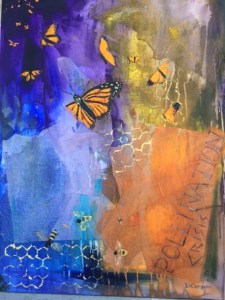
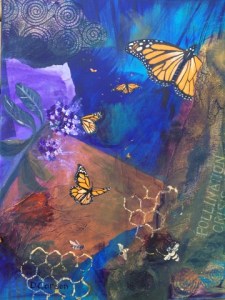
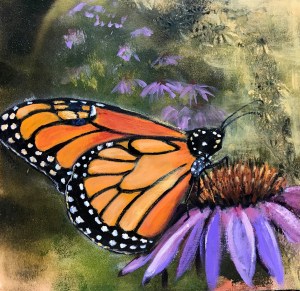
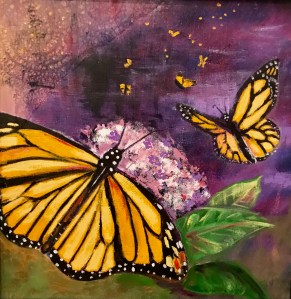
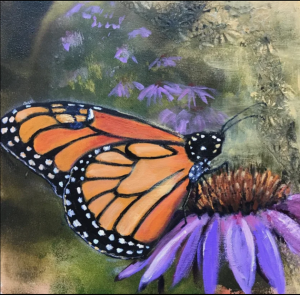
Declining numbers of pollinators is a problem the artist hopes to highlight through mixed media paintings of bees and monarch butterflies. Pollinators are integral to our environmental food chains as well as the food humans consume.
Pesticides, habitat loss, climate change, and disease are problems we need to recognize and then implement changes to improve the problem. Ontario has recognized the damage from neonic pesticides but its use continues. Neonic pesticides are widely used on mono crops such as corn and soya beans. This pesticide affects the nervous systems of bees and butterflies. Mixed crops and companion planting provide a healthier environment for pollinators to do their tasks.
We can make a positive difference for pollinators by:
- Awareness
- Education-spread the news
- Plants for pollinator such as bee balm, butterfly bush, black eyed susan, coneflower, clover and dandelions
- Support farming that is environmentally conscious, such as mixed crops, companion planting, and organic farming
- Have fields and areas of wildflowers and indigenous plant species
Bees work together, we can work together and make improvements.

Companion Gardening
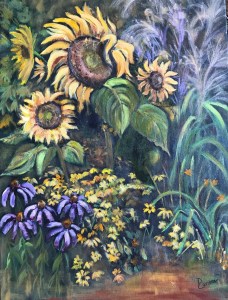
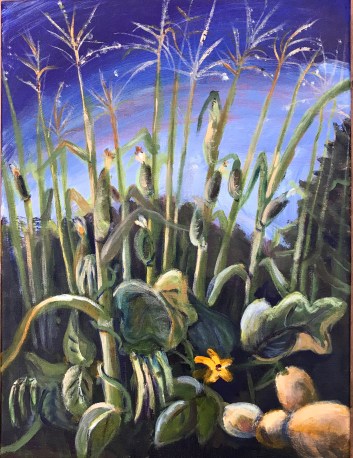
No pesticides or inorganic fertilizers are used. Plants compliment each other providing needed nutrients and discourage pests. Bees and butterflies can distribute pollen in this healthy environment, resulting in crops that provide healthier produce for human consumption.
Native people used this sustainable method to grow three crops that are environmentally and nutritionally complimentary. Beans use corn stalks to climb toward the sun and squash shades the ground conserving moisture.
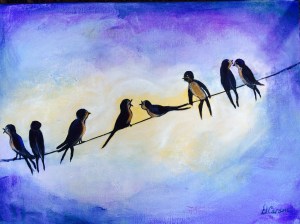
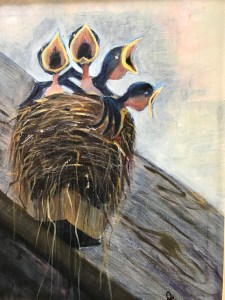
Species at Risk – Barn Swallows and Chimney Swifts
Whether endangered or threatened several species are losing habitat due to development.
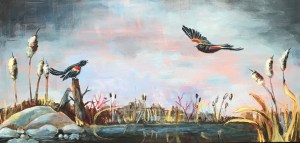
Two bird populations I watch closely each summer are barn swallows and chimney swifts. Both have decreased significantly.
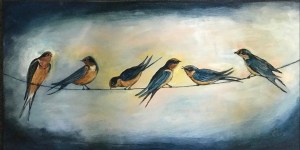
There are 50 nests in my barn fully active with barn swallows socializing and catching insects. From May to August, the birds tend to their fledglings. A bird will often have two rounds of five babies per summer season. They prefer to nest in structures like lofts and barns and can often be found playing and interacting with each other.
The chimney swift prefers to nest in chimneys and hollow logs. With less chimneys and depleted forest areas, chimney swifts have a decreasing habitat for nesting.
Through my paintings I hope to bring awareness regarding species at risk and their habitats.
 Debra Carson Art